
The AI-First Lifecycle
Posted on:
Today, I want to talk about how software engineering is changing with AI. More specifically, how the entire software lifecycle needs to adapt. Right now, most of the attention is on coding. We see constant updates about tools like Claude, Codex, or Cursor, and how they improve developer productivity. But coding is only one part of the lifecycle. AI needs to be part of everything.
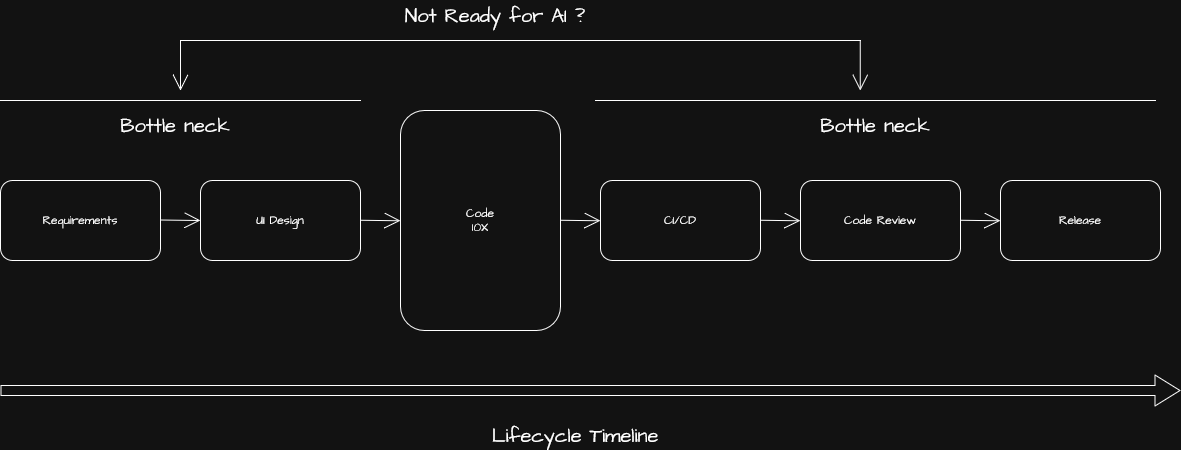
What I am seeing today is that by increasing developer output with AI tools, we are creating new bottlenecks. Requirements, design, and architecture reviews are becoming pressure points. The system slows down at the beginning because these stages cannot keep up with the speed of code generation.
At first, this looks like a growing backlog that can be tackled easily. Over time, especially in larger teams, it becomes more visible. One side of the team is ready to execute, but they are still blocked waiting for decisions or validation. The issue is not code, it is the early part of the lifecycle.
At the same time, we are generating much more code than before. Code review is still mostly manual, and it becomes another bottleneck. It creates its own backlog. This issue is not code, but a reaction to generating a large amount of code. Sometimes the person reviewing the code has never seen it, which is also the case for the original author because AI generated a large portion. This is very different from how we used to work. We need to rethink the entire lifecycle to avoid bottlenecks and reviewer fatigue.
I believe we will move toward a lifecycle where traditional code review becomes less necessary. If AI can validate code locally, including correctness, style, and consistency, then we do not need another layer of AI or a human to reprocess the same work. The developer, with AI assistance, can produce and validate the code in one step. CI will still ensure that everything builds and passes tests, but the need for manual review will decrease significantly.
Deployment and issue management will also need to evolve. If AI is not actively involved in detecting and fixing bugs, this becomes another bottleneck. More code naturally leads to more bugs. The volume increases, and without automation, the system cannot keep up.
So the point is not just to use AI to write code faster. Every part of the lifecycle must operate at the same level of speed. Even within coding itself, we will rely on multiple AI agents validating each other to improve quality. Imagine a water pipe with many joints: for best flow you must have the same size of pipe along the whole route.
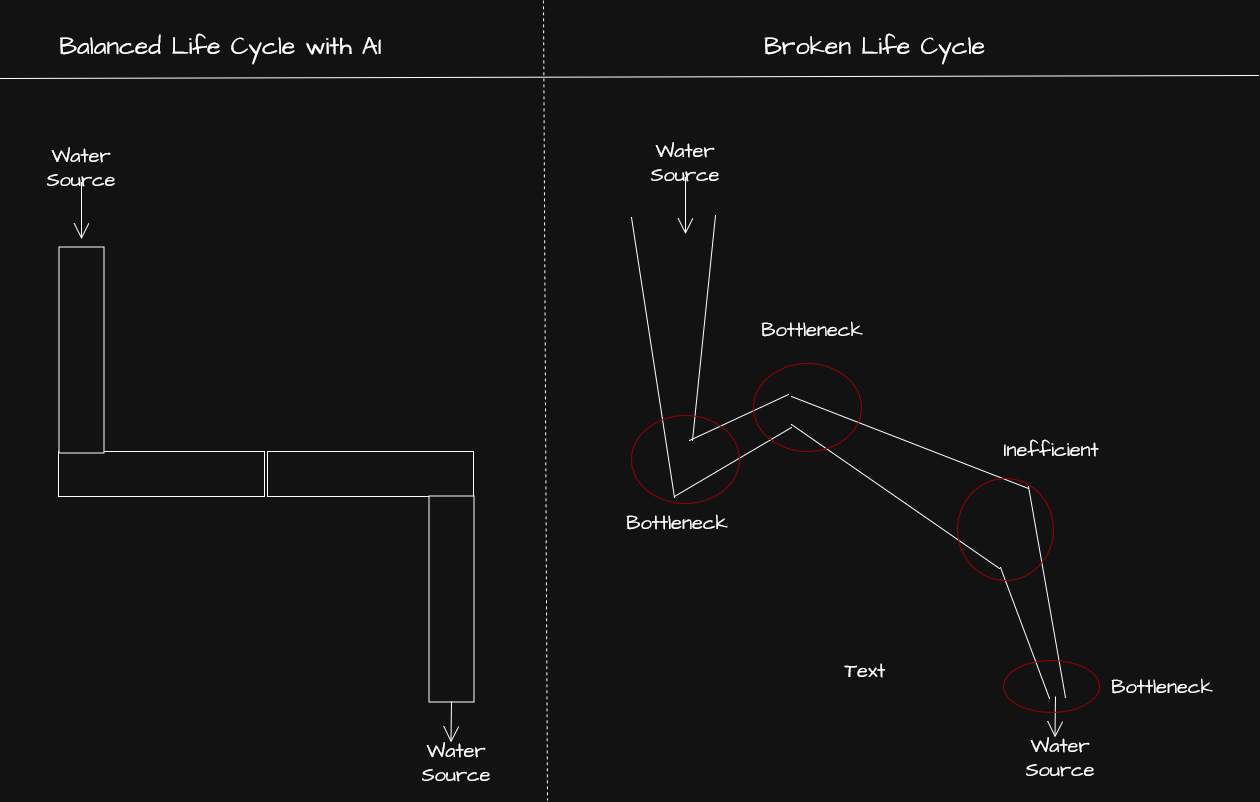
The future is an AI integrated lifecycle from start to finish. And there is a final point that is important. AI is so efficient that organizations with slow processes will struggle. If you can generate four, five, or even twenty times more code, but still depend on manual processes that take days, weeks, or months, your overall productivity will not improve to its full potential. These slow processes will become the real bottleneck. Everything needs to be faster. Everything needs to be automated. Otherwise, competitors who fully embrace this shift will move faster, ship faster, and capture the market before you do.