The Heritage of the Harness
Posted on:
High on the sunlit hills of Rommock Farm, work was done the way it had always been done. At the center of it all was Theodor, an old donkey who had trod the farm’s dirt paths longer than any other creature. Theodor did not lead because he was the fastest or the wisest, he led because his name was written first on the barn ledger. Tenure was his crown, and seniority was his law.
Then came Pedro, an energetic young horse full of vigor and sharp observation. Pedro saw work not as a trial to endure, but as a system to improve.
Within his first month, Pedro noticed that the water troughs were refilled by carrying heavy wooden buckets back and forth from the creek, a grueling three hour chore every morning. Pedro designed a simple system of bamboo gutters to divert water straight from the hill spring directly into the stalls.
He brought the diagram to Theodor. The old donkey barely looked up from his hay.
“A clever trinket,” Theodor rasped, shaking his head. “But water running through bamboo will taste of wood, and the cows will refuse to drink. Besides, the morning bucket walk builds character in the draft animals. We are not ready for such shortcuts.”
“But Theodor,” Pedro pressed, “it saves three hours a day! We could use that time to clear the east pasture.”
Theodor raised a hoof. “Patience, Pedro. You have been here one season. I have been here twelve. When you have pulled the plow as long as I have, your ideas will be taken more into consideration. For now, pick up the buckets.”
Weeks later, Pedro proposed rotating the corn crops to let the depleted soil rest. Theodor dismissed it instantly: “If we change the crops, the crows will not recognize the fields and will migrate to the barn instead.” It sounded like farm wisdom on the surface, but it was merely a shield against change.
Time and again, Pedro brought ideas born of merit and efficiency, only to be turned away with plausible sounding excuses and the same tired promise: Wait until you have earned your years.
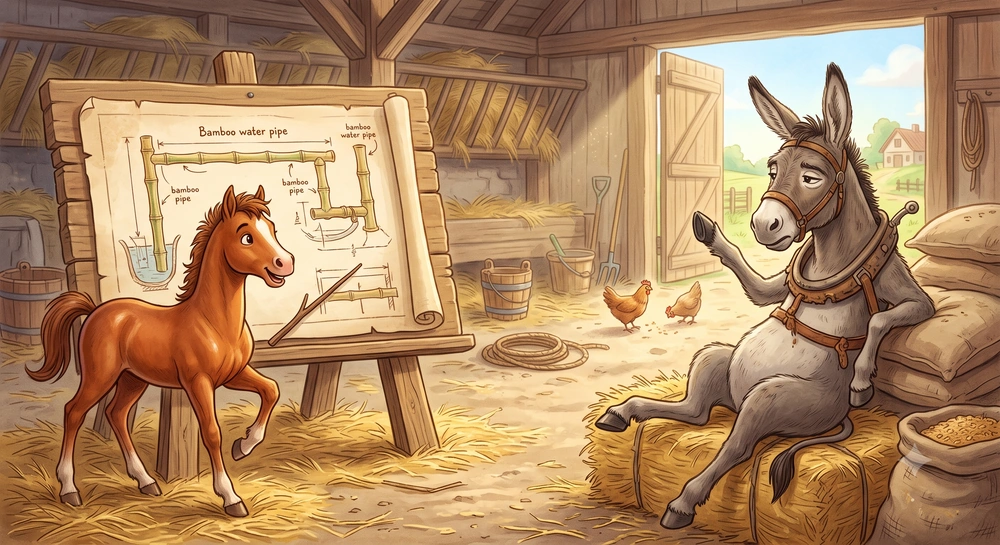
Years bled into seasons. Pedro stopped bringing diagrams to the barn. To survive without frustration, he learned to stop looking for solutions and start looking for routine. He learned that standing out brought friction, while playing the veteran brought quiet respect.
Eventually, Theodor grew too old to walk the perimeter and left Rommock Farm for the quiet paddocks of retirement.
By right of longevity alone, Pedro was given the leather harness of the senior overseer. He took Theodor’s old spot by the shade of the grand oak tree, his heart filled with a quiet satisfaction. He had finally paid his dues. He had earned his authority.
Not long after, a young stallion named Joey arrived at the farm. Joey was bright eyed, swift, and observed the farm with the exact same spark Pedro had possessed decades earlier.
On a hot afternoon, Joey ran up to Pedro, his hooves bouncing with excitement. “Pedro! Look at the grain elevator. If we attach a simple counterweight pulley to the barn door, one animal can lift ten sacks at once instead of three!”
Pedro looked down at the young stallion. The sun beat down on Pedro’s aging shoulders, and a strange, knee jerk irritation rose in his chest. The pulley system was brilliant, he could see that instantly, but an unsettling feeling washed over him. Accepting the idea meant admitting that the old way was inefficient, and that this newcomer knew something he did not.
Pedro adjusted his heavy harness and shook his head slowly.
“A flashy idea,” Pedro said, his voice echoing Theodor’s old cadence. “But a counterweight will place too much strain on the barn rafters during high winds. The roof could collapse. Besides, lifting heavy sacks builds the strength a young horse needs.”
Joey stared at him in disbelief. “But Pedro, the rafters are solid oak! We can reinforce them in an afternoon,”
“Patience, young one,” Pedro interrupted, raising a hoof to quiet him. “You have been here one season. I have been here fifteen. When you have pulled the plow for as long as I have, your ideas will be taken into consideration.”
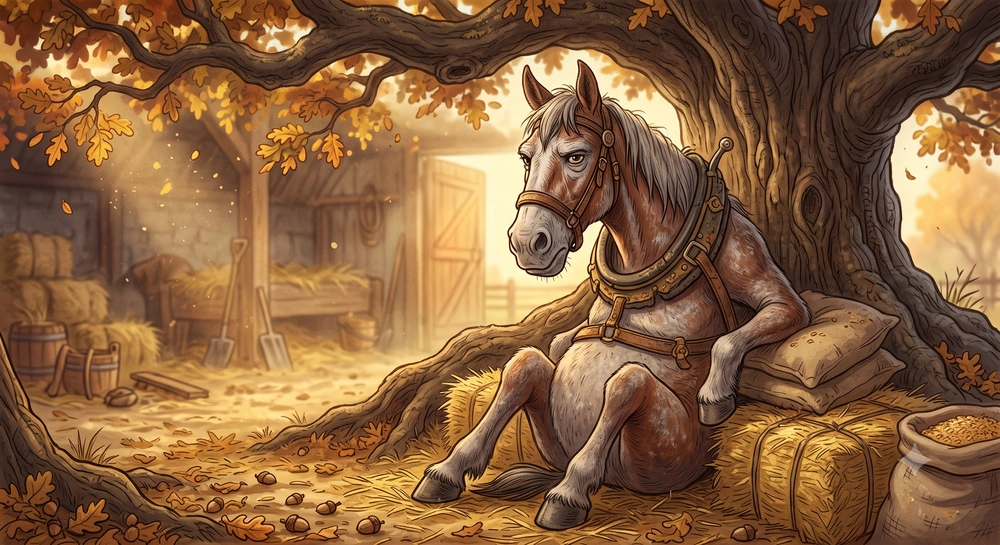
Joey stood frozen, seeing not a mentor, but an impenetrable wall of time served authority. The young stallion lowered his head, picked up a single grain sack, and walked away into the shadows of the barn.
Pedro watched him go, feeling a faint, ghostly sting of memory in his chest. For a fleeting second, he remembered standing in that exact spot, holding a parchment blueprint, crushed by the weight of arbitrary authority. But the feeling passed quickly, swallowed by the comfortable comfort of his own tenure.
The environment had won. The farm remained slow, inefficient, and stagnant, not because it lacked bright minds, but because it had built a culture where wisdom was measured in winters survived rather than value created.
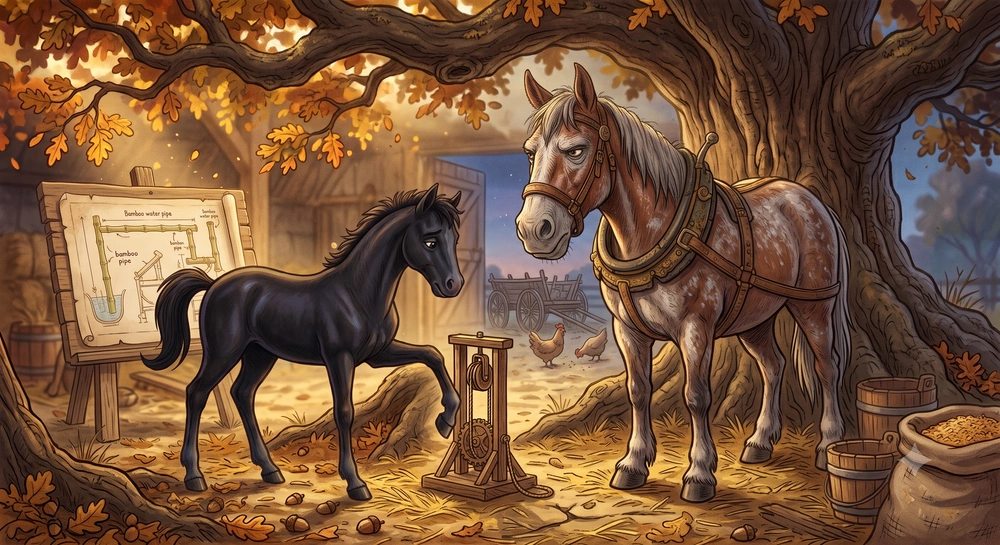
Moral: Authority granted by time alone starves innovation, while a culture that values tenure over merit will eventually transform even its brightest champions into the very gatekeepers they once sought to change.
Discussion
Replies are loaded from the public Mastodon thread for this article.
Loading replies from Mastodon...