The Peacock’s Perfect Trial
Posted on:
In a quiet clearing at the edge of a forest, there lived a peacock known far and wide for his elegance and certainty. His feathers were always perfectly arranged. His voice carried authority. And above all, he believed he understood excellence better than any creature around him. One day, the peacock decided it was time to choose an assistant. “I will not rely on simple impressions,” he said aloud. “I will build the most refined selection process ever seen.” And so he began.
When the first candidate, a young hare, arrived, the peacock greeted him warmly.
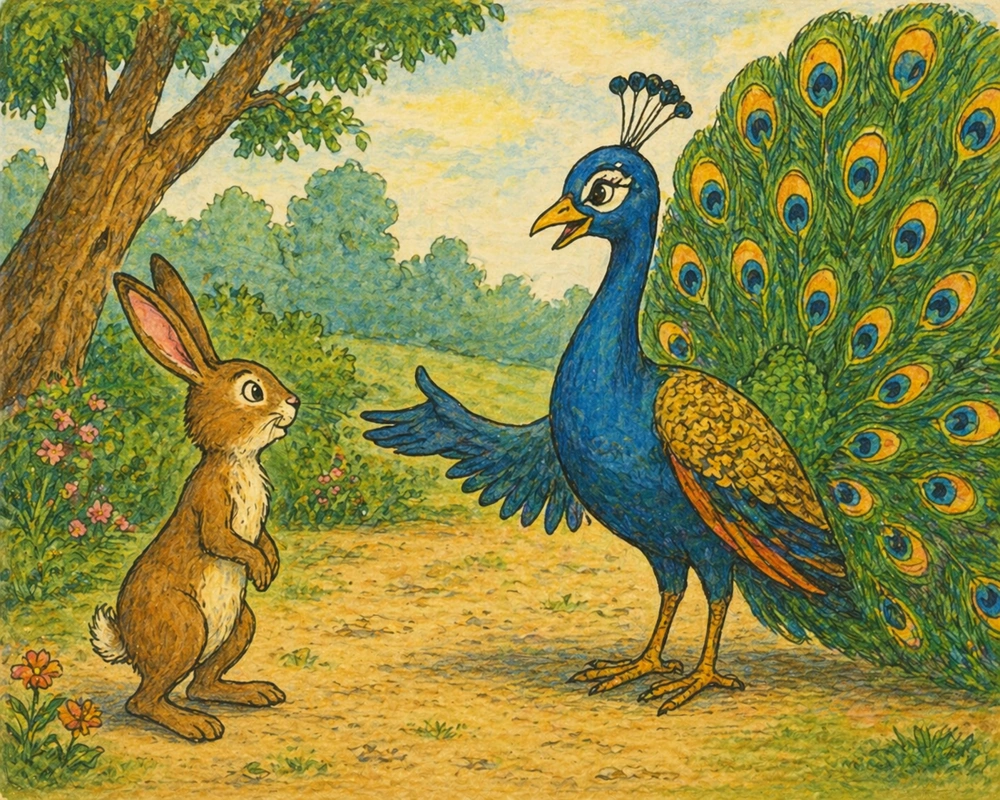
“We will begin with a simple task,” said the peacock. “Run across the meadow and return.” The hare did so with ease. “Good,” said the peacock. “But that tells me little.” Then came a second task. And a third. And a fourth. The hare was asked to balance on stones, recall long sequences of instructions, mimic dances, solve riddles, and return the next day to repeat variations of the same. “Excellence must be proven from many angles,” the peacock explained.
Days passed.
Then came more candidates. A fox, a squirrel, a duck, and even a quiet tortoise. Each was guided through the same growing sequence of trials.
The peacock refined his process constantly. He created charts to track performance. He added scores for speed, memory, grace, and tone. He introduced “fit assessments,” where he observed how closely each candidate resembled his own posture, cadence, and way of thinking. “This removes bias,” he assured himself. “Everything is measured.”
The process grew longer. Five rounds became six. Six became seven. Some candidates returned eight or nine times. They were given problems to solve overnight. Tasks to practice. Behaviors to refine.
And slowly, something changed. The candidates adapted. The fox studied how the peacock spoke and mirrored his phrasing. The hare adjusted his movements to match the peacock’s rhythm. The squirrel memorized patterns in the questions and prepared answers in advance. Even the tortoise learned to pause in just the right way, as the peacock seemed to appreciate.
They learned the system. They learned the expectations. They learned the game.
At last, after many rounds, the peacock reviewed his charts. “This one scores highest,” he declared, selecting the fox. “The process has revealed the best.”
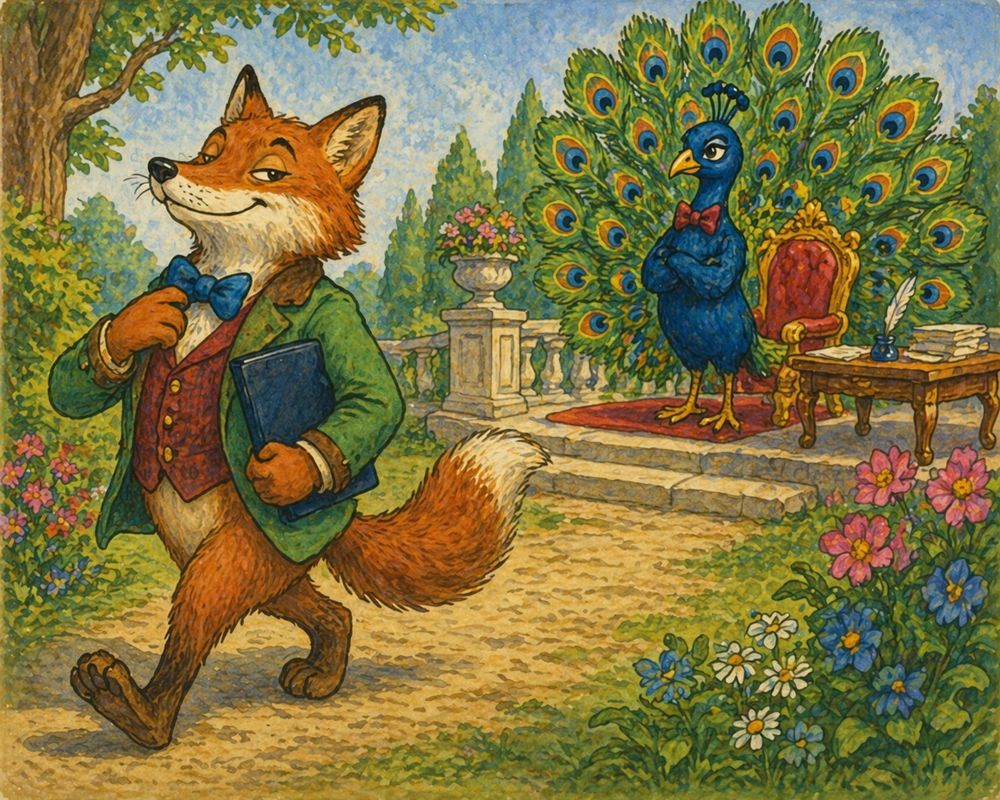
Time passed.
The fox worked beside the peacock. Some days were good. Some were not. The work progressed much as it always had. Nothing remarkable. Nothing flawed. Just… ordinary.
One afternoon, as the fox watched the peacock design yet another new layer for the next selection, he tilted his head. “May I ask something?” said the fox. “Of course,” replied the peacock, without looking up. “If you had simply spoken with me, watched me for a short while, and trusted your instinct… would the outcome have been different?”
The peacock paused.
He looked at his charts. His tables. His notes, carefully filled across many days. Then he looked at the fox. The question lingered. “I have removed bias,” the peacock said finally, though softer than before. The fox did not argue. He only nodded.
But later, alone, the peacock adjusted a feather that had already been perfectly in place. Deep within, something unsettled stirred.
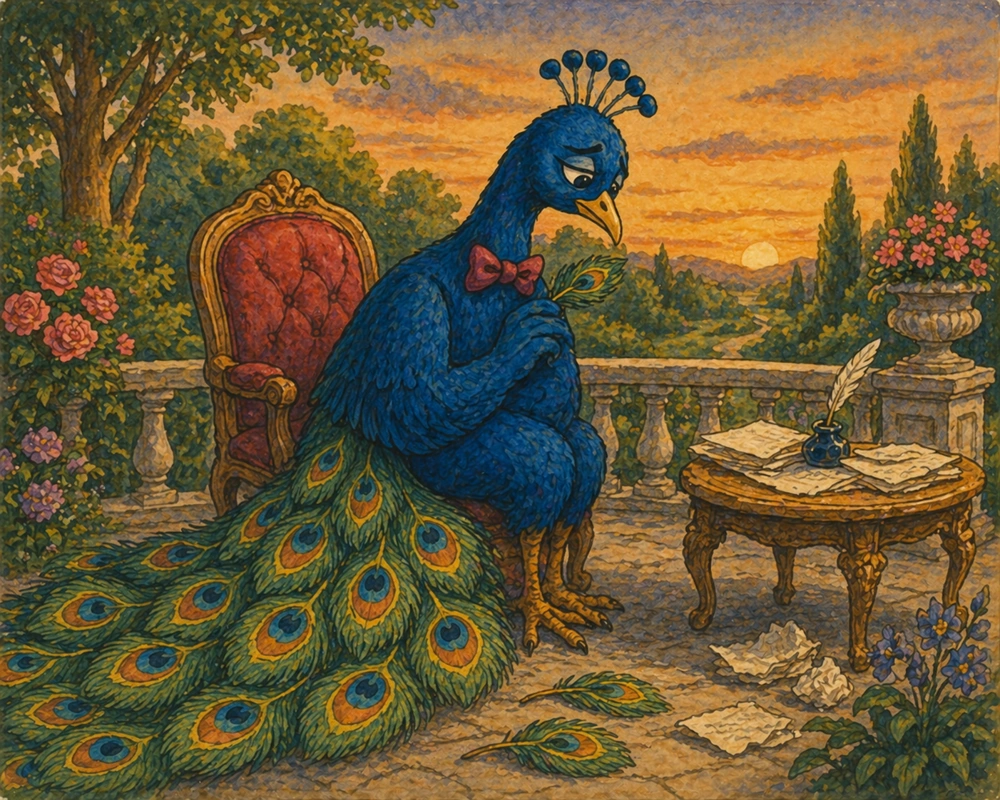
He remembered the early days, when a single conversation had felt enough. When judgment had been simpler, clearer. Now, everything was measured. Everything justified. And yet, the result felt no sharper.
Still, the peacock continued. The process was too refined to question. Too detailed to doubt. And as new candidates arrived, he welcomed them with pride. “We have the most rigorous system,” he would say. And each candidate, watching closely, began once again to learn how to play.
Moral: When we build elaborate systems to escape our own uncertainty, we may only hide it beneath layers of structure. Complexity can feel like truth, even when it leads us no closer than simple judgment once did.
Discussion
Replies are loaded from the public Mastodon thread for this article.
Loading replies from Mastodon...