The Season They Remembered One Storm
Posted on:
At the edge of the orchard stood a row of tall granary towers, built from timber and thatch, where the whole settlement kept its grain dry through winter. Every year, a pig named Bramwell was given the task of deciding which builder would move into the fine new quarters beside the millhouse, and which would not.
He called it the Review of the Harvest. He kept a thick ledger with a leather cover. He visited every tower himself, nodding slowly, writing things down. "Fair and thorough," he liked to say. "Nothing decided in haste."
The settlement believed him, because the ledger looked heavy, and heavy things are easy to mistake for true things.
On the northern side of the orchard worked a beaver named Fenwick. Fenwick rose before the roosters and climbed until the last light left the thatch. He replaced rotten beams in the second granary before the spring rains. He rebuilt a collapsed loft floor after a hard frost cracked its supports. He reinforced eleven weak roof joints before the harvest moon, and raised the grain bins on new stilts so damp ground could never reach them again. By the settlement's own count, he had completed forty-three repairs that year, and every one of them still stood.
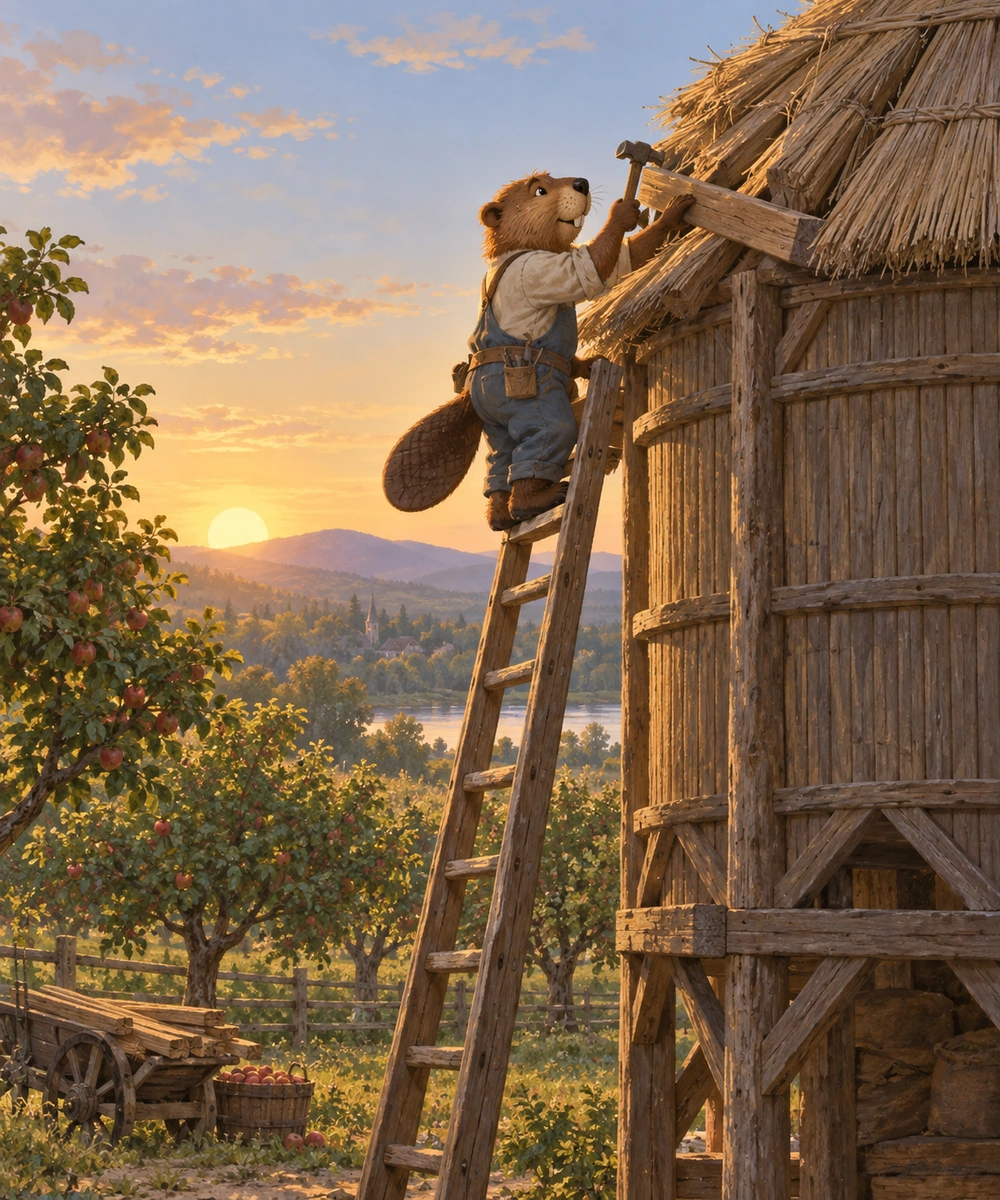
On the southern side worked a fox named Rusque. Rusque did not rise before the roosters. He preferred to rise after them, when the light was flattering. That year he had swept one loft floor, complimented Bramwell's ledger twice, and once, at a gathering by the millhouse, told a story about a heron that made Bramwell laugh so hard he nearly fell from his stool.
Bramwell had already decided, long before the review season began, that it would be Rusque who moved into the quarters beside the millhouse this year. He had decided it the evening of the heron story, if he was honest with himself, which he rarely had reason to be. But a decision made in an evening does not look respectable in a ledger. So Bramwell went looking for reasons, the way an animal goes looking for firewood: not to discover whether it exists, but to carry home only the pieces that fit in his arms.
He visited Fenwick first.
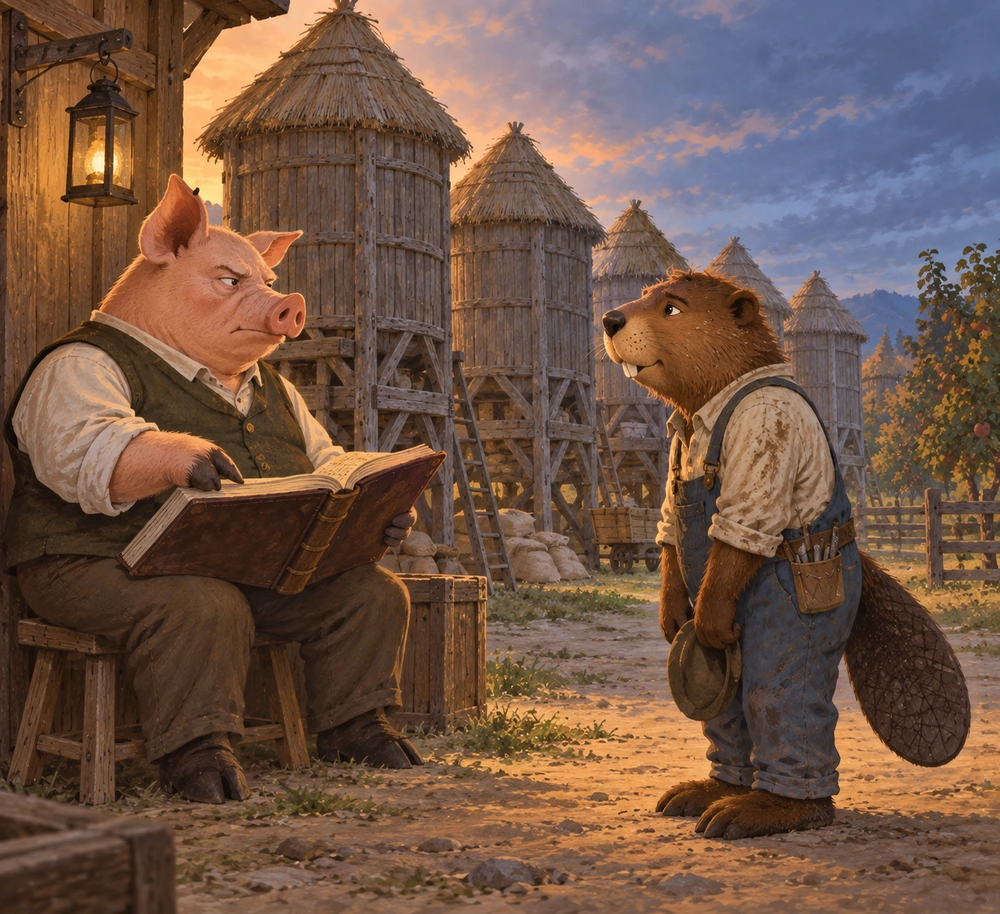
"Tell me about your year," said Bramwell, pencil ready. Fenwick told him about the forty-three repairs. About the loft floor. About the harvest that stayed dry because the bins had been raised in time. Bramwell wrote some of it down. Then he turned a page in his ledger and tapped it twice. "And the fourth granary," he said. "In late summer. Its roof failed during the storm." Fenwick nodded slowly. "It did. I misjudged the old ridge beam. I rebuilt it within two days." "Within two days," Bramwell repeated, writing only the first three words. "Forty-two others held," said Fenwick. "Yes," said Bramwell, not looking up. "But a roof failed. Under your watch." He closed the ledger as though something important had been settled.
Then he visited Rusque.
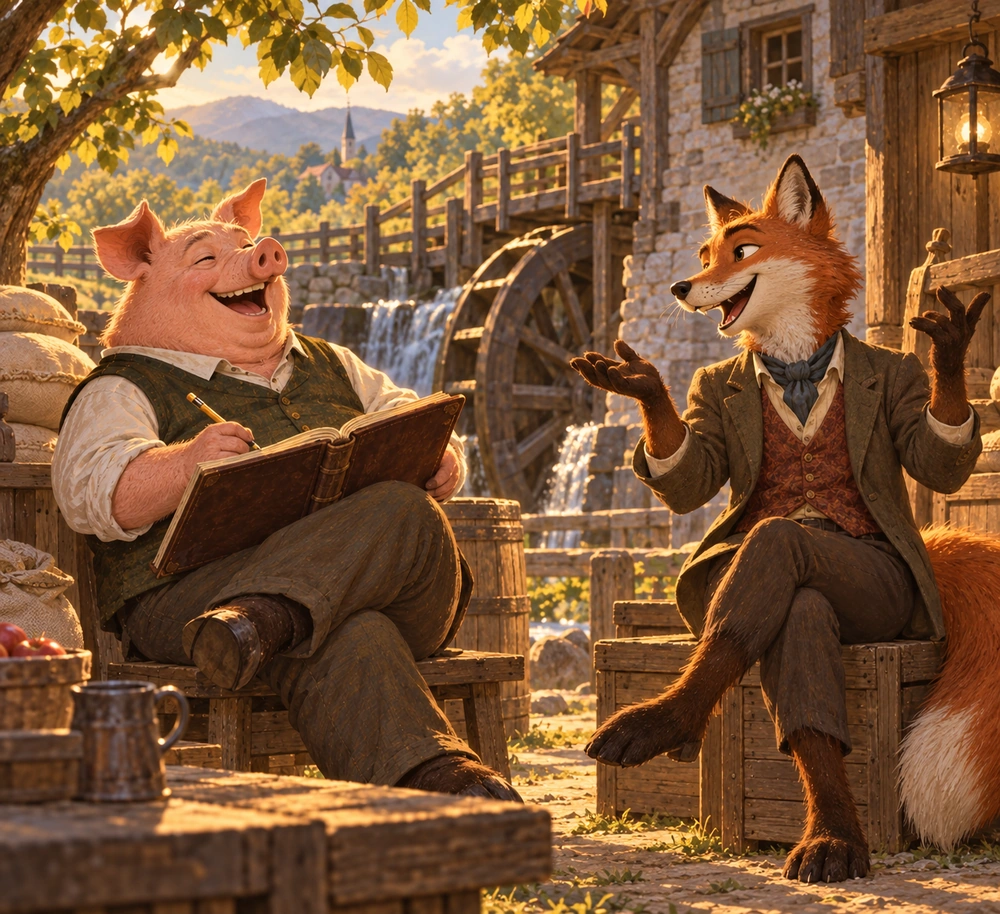
"Tell me about your year," said Bramwell, and this time his voice was warmer. Rusque told him about the loft floor he had swept. He told the heron story again, slightly longer this time. Bramwell laughed again, slightly longer this time. "You have a gift," Bramwell said, writing quickly now. "Vision. Presence. The others could learn from watching you." He did not ask what Rusque had built, because he had already decided the answer did not matter, and a pig cannot write down what he has decided not to ask.
The Review of the Harvest concluded on the appointed day, as it always did, with the whole settlement gathered by the millhouse. Bramwell raised the ledger so all could see its weight. "I have examined this season with great care," he announced. "Every tower. Every effort. The record speaks for itself." He opened to the marked page. "Fenwick," he said, "is a diligent builder. But this year, a roof failed under his care, and reliability, above all, is what this settlement depends on." Fenwick said nothing. Forty-three repairs stood behind him, unmentioned, still holding back the winter they had always held back. "Rusque," Bramwell continued, brightening, "has shown vision this season. Presence. The kind of thinking this settlement needs more of."
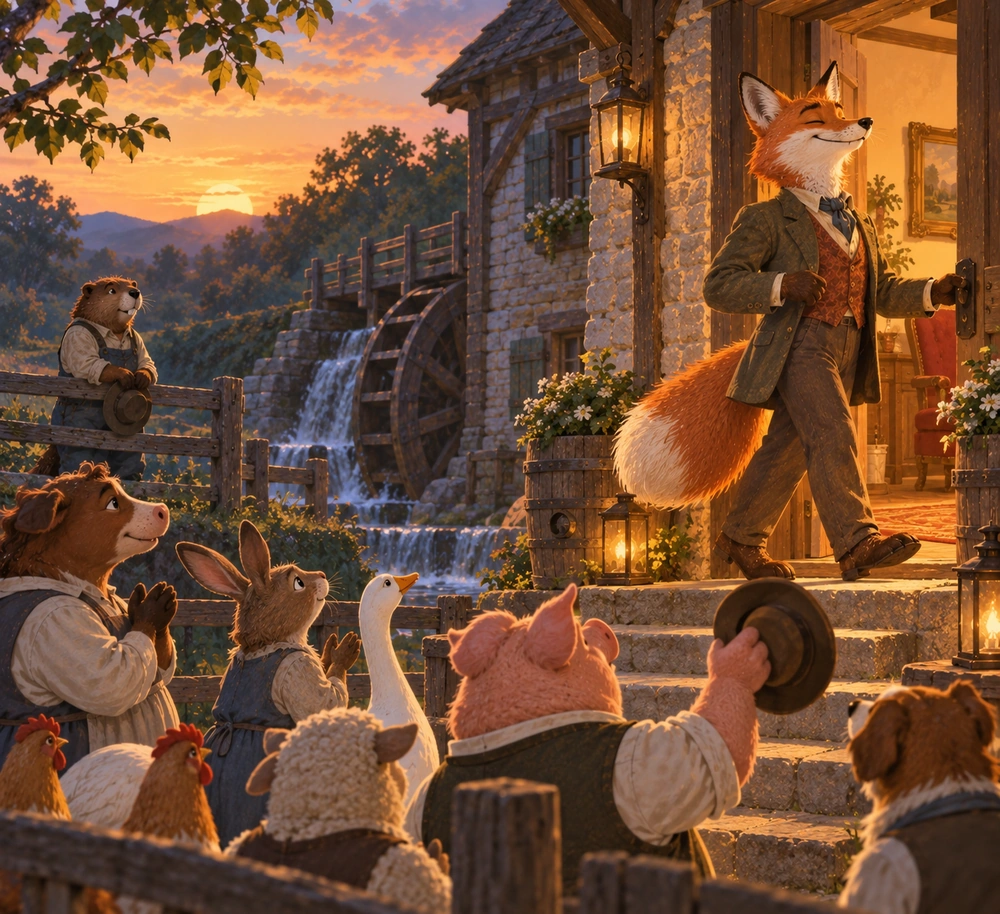
Rusque moved into the quarters beside the millhouse before the week was out.
That winter, the fourth granary, rebuilt in two days by a beaver everyone had decided to remember for one storm instead of forty-two seasons, kept every seed inside it dry. Nobody wrote that down. There was no page marked for it, because the ledger had already closed on that question, and Bramwell did not reopen closed questions, even when the winter answered them anyway.
A young lamb, watching the towers from the fence line, finally asked an old goat who had seen many such seasons pass. "How can the pig call it fair, when he already knew the answer before he asked a single question?" The goat chewed slowly before answering. "Because the ledger was never for finding the truth. It was for making the answer he already carried look like it had been found." "Then why does he ask questions at all?" "So that the one who loses can be told he was heard, and the one who wins can be told he earned it. Both are more comfortable than the truth, which is that the settlement's answer was decided before it was measured."
Moral: A process that looks rigid and impartial can still be built around a verdict chosen in advance. Diligence rarely protects an honest worker from a single remembered failure, while charm rarely needs more than one good story to cover the absence of any real work: the one holding the ledger is not searching for what happened, only for what supports what he already decided.
Discussion
Replies are loaded from the public Mastodon thread for this article.
Loading replies from Mastodon...